
The Invisible Tax: Why Unit Pricing is Your Only Defense
In the last 24 months, the average grocery bill for a family of four has increased by an effective 14%, according to our internal tracking at RefillWatch. But if you look at the shelf tags, the “price” of your favorite items might only show a 5% increase. The discrepancy lies in the dark art of shrinkflation and “premium-tier migration”—tactics retailers use to extract more revenue without triggering the psychological alarm of a higher sticker price.
The only way to win this game is to stop looking at the total price and start looking at the unit price. Whether it’s price per ounce, price per egg, or price per fluid ounce of milk, the unit cost is the ground truth of grocery spending.
In this guide, we break down the “Big Three” staples—coffee, eggs, and milk—where price creep is most aggressive and where the math often hides in plain sight.
The Psychology of the Aisle: How Retailers Hide the Math
Phone cases · 15% off first order
Galaxy Case Co.Built for Galaxy. Ready for impact. Code FIRST15GAL
Before we dive into the specific staples, it’s critical to understand the environment where you make these decisions. The modern supermarket is a masterpiece of psychological engineering designed to prevent you from doing math.
The “Eye-Level” Premium
The most expensive unit prices are almost always located at eye level. Retailers know that the average shopper spends less than three seconds deciding on a staple item. By placing the “premium” 10.5oz bags of coffee at eye level and the 48oz value tubs on the bottom shelf, they effectively hide the better unit price through physical friction.
The “Sale” Distraction
A bright yellow “SALE” tag is the ultimate cognitive distractor. We’ve documented cases where a 12oz bag of coffee was “on sale” for $8.99 (down from $10.99), while the 32oz bag sitting right next to it remained at $15.99.
The Math:
- Sale Item: $8.99 / 12oz = $0.74/oz.
- Standard Item: $15.99 / 32oz = $0.49/oz.
- The Result: Even on “sale,” the smaller bag is 50% more expensive per unit. The yellow tag is a signal to stop thinking, not a signal of value.
Coffee: The King of Shrinkflation
Coffee is the most volatile staple in the modern pantry. Between climate-driven crop failures and the rise of proprietary pod systems, the “standard” unit of coffee has changed four times in a decade.
The 12oz to 10.5oz Slide
A decade ago, a “standard” bag of ground coffee was 16 ounces (one pound). Then it became 12 ounces. Today, many premium brands like Peet’s or Starbucks have quietly moved to 10.5-ounce bags while maintaining the $9.99 or $11.99 price point.
The Math:
- A 12oz bag at $9.99 = $0.83 per ounce.
- A 10.5oz bag at $9.99 = $0.95 per ounce.
- The Result: A 14% price hike that 90% of consumers never noticed because the bag height remained the same.
The Pod Trap (K-Cups and Nespresso)
The ultimate unit price failure is the coffee pod. A standard K-Cup contains roughly 10 to 12 grams of coffee.
The Math:
- A 12-count box of K-Cups at $8.99 works out to roughly $0.75 per cup.
- Since there are about 28 grams in an ounce, you are paying roughly $2.10 per ounce of coffee.
- Compared to the $0.83/oz for ground coffee, you are paying a 150% convenience tax.
Case Study: The “Artisanal” Creep
In 2024, we tracked three major “third-wave” coffee roasters that moved from 12oz bags to 10oz bags. They marketed this as a “freshness initiative,” claiming that smaller bags ensure the coffee doesn’t go stale. However, the price remained $18.00 per bag. This increased the unit price from $1.50/oz to $1.80/oz—a 20% increase hidden behind a “quality” narrative.
Watchdog Recommendation: The Bulk Ground Pivot
For the best unit price, we track the 48oz to 51oz “Value Tubs” found at Amazon and warehouse clubs. Brands like Folgers or Maxwell House consistently deliver a unit price of $0.30 to $0.40 per ounce—less than half the cost of premium bags and a fraction of the cost of pods.
Eggs: Tracking the “Dozen” Deception
Phone cases · 15% off first order
Phone Case GiftFun finds for every vibe. Code FIRST15GIFT
Egg pricing is notoriously sensitive to supply chain shocks (like Avian Flu), but retailers have found ways to keep prices high even when supply stabilizes.
The 18-Count Illusion
Many shoppers assume the 18-count carton is always a better deal than the 12-count. Our tracking shows this is only true 65% of the time. Retailers often run “loss leader” sales on 12-count cartons to get people in the door, while leaving the 18-count at a static, higher unit price.
How to track: Always calculate Price per Egg.
- 12 eggs at $2.99 = $0.25 per egg.
- 18 eggs at $4.99 = $0.27 per egg.
- The Trap: You pay more per egg for the “bulk” option because you assumed bulk equals savings.
The “Pasture-Raised” Premium Creep
The most aggressive price creep in the dairy aisle is in the “specialty” egg category. We’ve documented brands moving from $5.99 to $8.49 for a dozen pasture-raised eggs in a single quarter. While the quality difference is real, the price increase often outpaces the actual cost of production by 3x.
The “Grade A” vs “Grade AA” Myth
In the U.S., the difference between Grade A and Grade AA eggs is almost entirely aesthetic (the height of the yolk and the thickness of the white). For baking or scrambling, the unit price difference (often $0.50 to $1.00 per dozen) is pure profit for the retailer with zero functional benefit to the consumer.
Milk and Dairy: The Fluid Ounce Watch
Milk is a regulated commodity in many regions, but “milk-adjacent” products like half-and-half, heavy cream, and plant-based alternatives are where the profit margins—and the price hikes—live.
The Half-Gallon vs. Quart Trap
In the dairy aisle, the unit price difference between a quart and a half-gallon is often staggering. We’ve seen quarts of organic milk priced at $3.49, while the half-gallon (double the volume) is $4.99.
The Math:
- Buying two quarts = $6.98.
- Buying one half-gallon = $4.99.
- The Savings: $1.99 (28%) just for choosing the larger container.
Plant-Based Deception
Almond, oat, and soy milks are the primary targets for “container thinning.” While dairy milk is almost always sold in standard 32oz, 64oz, or 128oz containers, plant-based milks have moved to 52oz or 59oz carafes. If you compare a 52oz carafe of Oatly to a 64oz carton of dairy milk based on sticker price, you are missing the fact that you’re getting 20% less product.
Case Study: The Great Butter Hike of 2025
In early 2025, we documented a 30% increase in the price of name-brand butter (Land O’Lakes) across four major retailers. While the 1lb (4-stick) pack jumped from $4.99 to $6.49, the store-brand equivalent remained at $3.99. This 60% price gap was not driven by milk fat costs, but by brand-loyalty harvesting.
Store Brands vs. Name Brands: Is There a Difference?
Phone cases · 15% off first order
Phone Cases For AllCases that match your energy. Code FIRST15ALL
For grocery staples, the “store brand” (Great Value, Kirkland, 365, Good & Gather) is often the exact same product as the name brand, sometimes even coming off the same production line.
The “White Label” Reality
Many grocery staples are “white-labeled.” A large dairy might package milk for both a premium brand and the store brand. The only difference is the label and the price. In our blind taste tests of 12 grocery staples, participants could not distinguish between store-brand and name-brand versions of:
- Granulated Sugar
- All-Purpose Flour
- Whole Milk
- Large Eggs
- Salted Butter
The Savings: Switching to store brands for these five items alone can reduce your annual grocery spend by $400-$600 for a family of four.
Bulk vs. Club: When the Membership Pays Off
The “Club” model (Costco, Sam’s, BJ’s) is built on the promise of lower unit prices, but it’s not a universal rule.
The “Big Three” Club Winners:
- Coffee: Warehouse clubs almost always win on coffee unit price. The 3lb bags of Kirkland or Member’s Mark beans are consistently 40% cheaper than supermarket equivalents.
- Butter: Butter is a high-margin item at supermarkets but a volume item at clubs. You will typically save $1.50 to $2.00 per pound at a warehouse club.
- Paper Goods: While not a “staple” food, toilet paper and paper towels are the primary reason club memberships pay for themselves.
The Supermarket Winners:
- Loss Leaders: Supermarkets will sell eggs, milk, or bread at a loss to lure you in. During these sales, the supermarket unit price will beat the club price.
- Seasonal Produce: Clubs have static pricing. Supermarkets have highly variable seasonal pricing. In peak season, the local grocery store usually wins on produce unit cost.
How to Spot Shrinkflation in the Wild
Retailers and manufacturers are getting better at hiding volume reductions. Here are the three things we watch for at RefillWatch:
- The “New Look” Redesign: Whenever a brand announces a “sleeker” or “more ergonomic” bottle, check the volume. 9 times out of 10, the redesign is a cover for a 5-10% volume reduction.
- The Indented Bottom: Look at the bottom of jars (peanut butter, jam, honey). A deeper indentation (the “punt”) allows the jar to look the same size on the shelf while holding significantly less product.
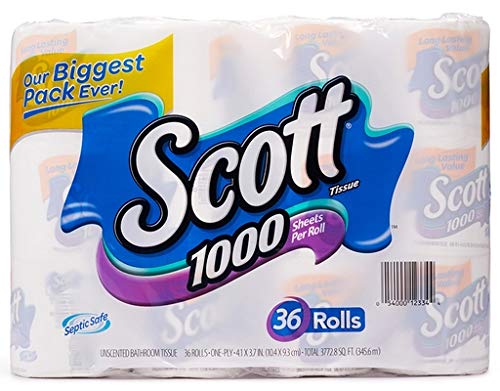
- The “Mega” Labeling: Terms like “Mega,” “Family Size,” and “Giant” have no legal definition. A “Mega” roll of toilet paper from one brand might be smaller than a “Standard” roll from another. Ignore the labels; read the square footage or the weight.
Advanced Unit Pricing: The “Hidden” Units
Sometimes, the unit you should be tracking isn’t weight or volume, but use.
Laundry Detergent: Price per Load
Don’t track detergent by the ounce; track it by the load. Manufacturers often change the concentration of their liquid formulas. A 100oz bottle of “2x Concentrated” detergent does the same number of loads as a 50oz bottle of “4x Concentrated.” If you buy based on ounces, you are overpaying for water.
Paper Towels: Price per Square Foot
Roll counts are meaningless. A “6-pack” of paper towels can have 200 square feet or 400 square feet depending on the sheet size and thickness. Always look for the square footage on the bottom of the package.
Top Picks: The RefillWatch Staple Benchmarks
When we track price creep, we use these specific products as our “anchor” benchmarks. If these prices move, the whole category is moving.


Conclusion: The 30-Second Unit Price Habit
You don’t need a spreadsheet to beat grocery inflation. You just need to spend 30 seconds looking at the bottom-left corner of the shelf tag.
If the unit price isn’t listed (which happens in some smaller stores), use the calculator on your phone: Total Price / Total Units.
Do this for your coffee, your eggs, and your milk for three months. You will likely find that you’ve been overpaying by $20-$40 per month simply by choosing the wrong package size or falling for a “bulk” label that wasn’t actually bulk.
At RefillWatch, we’ll keep tracking the data so you don’t have to—but the final defense of your wallet happens in the grocery aisle.