
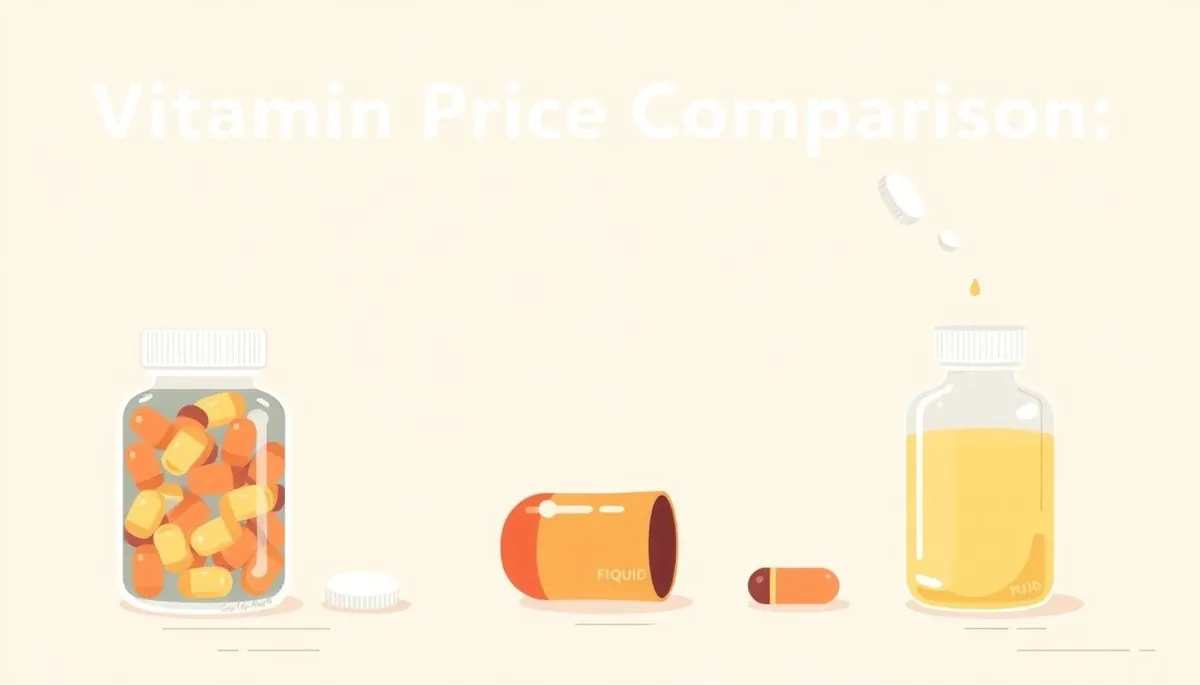
Vitamin Price Comparison: Gummy vs. Pill vs. Liquid

By Dana Wolff · Editor, RefillWatch
Published May 28, 2026
RefillWatch is reader-supported. When you buy through links on our site, we may earn an affiliate commission at no cost to you. This helps us keep tracking price creeps on your everyday essentials.
Vitamin Price Comparison: Gummy vs. Pill vs. Liquid
Vitamins are a booming business, with consumers spending billions annually in pursuit of better health. But navigating the supplement aisle can feel like a minefield, especially when it comes to price. Are you paying a premium for convenience, taste, or perceived effectiveness? We’re here to break down the cost per dose of vitamins in three popular forms: gummies, pills (tablets or capsules), and liquids. By comparing apples to apples, you can make an informed decision that fits your budget and health needs.
Why Vitamin Form Matters for Your Wallet
The form your vitamin takes impacts not just its price, but also its bioavailability (how well your body absorbs it) and the convenience of taking it. Gummy vitamins, for example, are often appealing due to their taste and ease of consumption, but they can be significantly more expensive per dose than pills or liquids. They also frequently contain added sugars and fewer nutrients per serving. Pills are generally the most economical option, but some individuals may find them difficult to swallow. Liquid vitamins offer faster absorption and precise dosing, but can be pricier than pills and require careful measuring.
Gummy Vitamins: Convenience Comes at a Cost?
Gummy vitamins are undeniably popular, particularly among children and adults who dislike swallowing pills. But their palatable nature often comes with a hefty price tag and some nutritional drawbacks.
Price Breakdown of Popular Gummy Vitamins
Let’s examine the cost per dose of some common gummy vitamins. We’ll use online prices for comparison and assume the recommended dose per serving.
-
Multivitamin Gummies (e.g., Vitafusion): A bottle of 150 gummies, with a recommended serving of 2 gummies per day, typically costs around $15. That translates to $0.20 per daily dose (or $0.10 per gummy).
-
Vitamin D Gummies (e.g., Nature Made): A bottle of 90 gummies, with a serving size of 1 gummy, costs approximately $12. This equals $0.13 per day.
-
Omega-3 Gummies (e.g., Nordic Naturals): A bottle of 60 gummies, with a serving size of 2 gummies, costs around $25. That’s a substantial $0.83 per daily dose (or $0.42 per gummy).
These examples illustrate that gummy vitamins can be significantly more expensive than their pill counterparts. The added sugars, flavorings, and gelatin required to make the gummy form contribute to the higher price. Furthermore, the manufacturing process may reduce the concentration of active ingredients, requiring you to take more gummies to achieve the same dosage as a pill.
Hidden Costs: Sugar Content and Fillers
Beyond the direct price, consider the hidden costs associated with gummy vitamins. Many brands pack their gummies with added sugars, such as glucose syrup or sucrose, to improve their taste. This can be detrimental to your health, especially if you’re trying to limit your sugar intake. Additionally, gummy vitamins often contain artificial colors, flavors, and other fillers that offer no nutritional value. Always read the ingredient list carefully to assess the overall healthfulness of the product.
Pill Vitamins: The Economical Option
Pill vitamins, including tablets and capsules, are generally the most cost-effective way to supplement your diet. They offer a concentrated dose of nutrients without the added sugars and fillers found in gummies.
Cost Analysis of Common Pill Vitamins
Let’s compare the cost per dose of pill vitamins to the gummy examples above.
-
Multivitamin Tablets (e.g., One A Day): A bottle of 300 tablets, with a serving size of 1 tablet per day, typically costs around $20. That equals $0.07 per daily dose.
-
Vitamin D Tablets (e.g., NatureWise): A bottle of 360 tablets, with a serving size of 1 tablet, costs approximately $15. This equals $0.04 per day.
-
Omega-3 Softgels (e.g., Nature Made): A bottle of 180 softgels, with a serving size of 2 softgels, costs around $20. That’s $0.22 per daily dose (or $0.11 per softgel).
As you can see, pill vitamins are significantly cheaper per dose than gummy vitamins. In the case of multivitamins, pills can be nearly three times less expensive. While some individuals may find pills difficult to swallow, the cost savings can be substantial over time.
Capsule vs. Tablet: Does It Affect Price?
The choice between capsules and tablets often comes down to personal preference. Capsules generally contain powdered or liquid ingredients enclosed in a gelatin or vegetarian shell, while tablets are compressed powders. Capsules may be easier to swallow for some individuals, as they tend to be smoother and more lubricated. However, they can sometimes be slightly more expensive than tablets due to the additional manufacturing steps involved. In most cases, the price difference is minimal, and the decision should be based on your individual needs and preferences.
Liquid Vitamins: Faster Absorption, Higher Price?
Liquid vitamins are often touted for their faster absorption rates compared to pills and gummies. The liquid form allows nutrients to be absorbed directly into the bloodstream, bypassing the digestive process. However, this benefit often comes at a premium price.
Price Comparison of Popular Liquid Vitamins
Let’s examine the cost per dose of some common liquid vitamins.
-
Liquid Multivitamin (e.g., MaryRuth’s Organics): A 32-ounce bottle, with a serving size of 1 tablespoon (approximately 0.5 oz), typically costs around $45. Assuming 64 servings per bottle, that translates to $0.70 per daily dose.
-
Liquid Vitamin D (e.g., Thorne Research): A 1-ounce bottle (approximately 30 servings), with a serving size of a few drops, costs approximately $15. This equals $0.50 per day.
-
Liquid Omega-3 (e.g., Carlson Labs): A 16.9-ounce bottle, with a serving size of 1 teaspoon, costs around $40. That’s approximately $0.80 per daily dose.
These examples reveal that liquid vitamins are generally the most expensive option per dose. The specialized formulation and packaging contribute to the higher price. While the faster absorption rate may be beneficial for some individuals, the cost may outweigh the advantages for others.
Precision Dosing and Potential Drawbacks
One of the key benefits of liquid vitamins is the ability to precisely control the dosage. This is particularly important for children or individuals who require specific nutrient levels. However, liquid vitamins also have potential drawbacks. They often have a shorter shelf life than pills or gummies, requiring refrigeration after opening. The taste can also be a concern, as some liquid vitamins have a strong or unpleasant flavor.
Making the Smart Choice: Cost vs. Needs
Ultimately, the best vitamin form for you depends on your individual needs, preferences, and budget. Here’s a summary to help you decide:
- Gummy Vitamins: Best for individuals who dislike swallowing pills, but be prepared to pay a premium and check sugar content.
- Pill Vitamins: The most economical option, suitable for most adults and older children who can swallow pills.
- Liquid Vitamins: Offers faster absorption and precise dosing, but comes at the highest price point.
Before making a purchase, compare the cost per dose of different brands and forms of the same vitamin. Consider the added ingredients, such as sugars, fillers, and artificial colors. Also, factor in your personal preferences and any specific health concerns.
Finally, remember to consult with your doctor or a registered dietitian to determine which vitamins and dosages are right for you. A balanced diet is the foundation of good health, and vitamins should only be used to supplement your diet when necessary. By making informed choices, you can optimize your health without breaking the bank. And remember to keep an eye on those price creeps - we at RefillWatch are always watching! Also, consider if a reusable water bottle can help you stay hydrated and save money compared to buying single-use bottles. One option is the /products/b00lzsj642-gatorade-32-oz-squeeze-water-sports-bottle-pack-of-2-new-eas/Amazon → Gatorade bottle.
Featured in this article
Shop the picks mentioned above
We earn a small commission if you buy through these links, at no extra cost to you.
