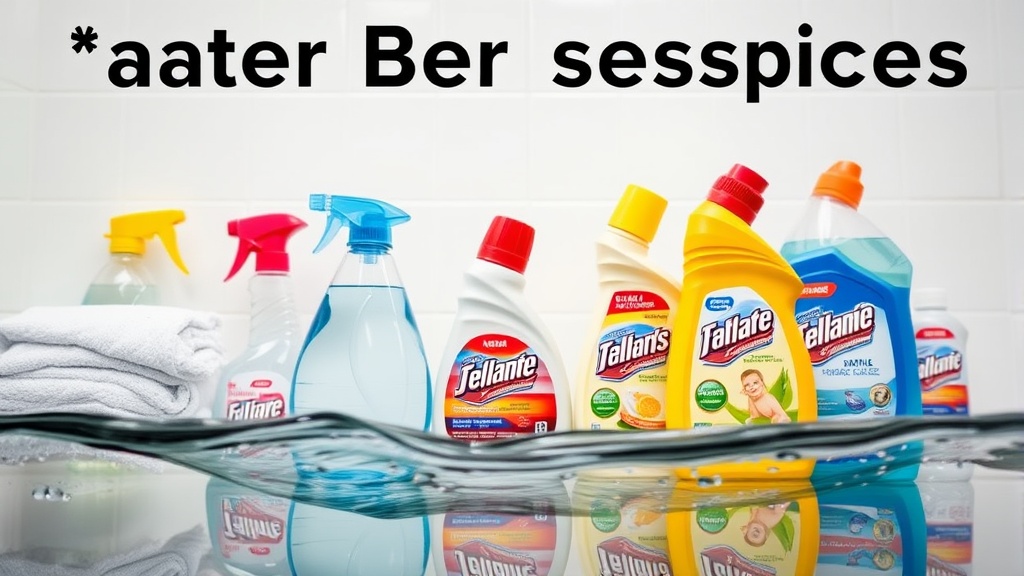
Many households want to cut down on single-use plastic waste and save money by switching to concentrated household cleaning products, but the abundance of choices and unclear labeling can be overwhelming. Understanding how concentrates work, how to calculate cost savings, and how to evaluate ‘refillable’ claims helps you pick the best concentrated cleaners for your needs while genuinely reducing waste.
What Are Cleaning Concentrates?
Cleaning concentrates are formulations of detergents, sanitizers, or other cleaning agents in a compact, highly concentrated form. Instead of buying fully diluted liquid in large plastic bottles, you purchase small bottles, pouches, or tablets containing a concentrated formula designed to be diluted with water before use.
For example, a concentrate might be 10x or 20x stronger than the ready-to-use solution you spray on surfaces. You add water at home to the appropriate amount to get effective cleaning strength. Concentrates often come in smaller, lighter packaging, reducing plastic volume and shipping emissions compared to ready-to-use liquids.
Why Choose Concentrates?
- Reduced Plastic Use: Smaller packaging size means less single-use plastic per cleaning volume.
- Lower Shipping Impact: Concentrates are lighter and take up less space, reducing carbon footprint.
- Cost Savings: Concentrates often provide more cleaning volume per dollar spent.
- Ingredient Transparency: Some concentrate suppliers provide full ingredient lists, unlike some big-brand full bottles.
However, not all concentrates deliver equal waste or cost savings, and some refill claims can be misleading. Let’s explore how concentrates work and their real benefits.
See also: Refillable Household Cleaners That Deliver Powerful Results
How Cleaning Concentrates Work
Phone cases · 15% off first order
Galaxy Case Co.Built for Galaxy. Ready for impact. Code FIRST15GALDilution Ratio and Concentration Ratio
The key number to understand is the dilution ratio: how much water to add per unit of concentrate to create the usable cleaning solution. For instance, a product that requires mixing 1 part concentrate with 20 parts water has a 20:1 dilution ratio.
The concentration ratio compares the strength of the concentrate to the ready-to-use solution. A 20x concentrate is 20 times as strong as the final product. This ratio helps you understand how many uses or how much surface area a single bottle will clean once diluted.
Refilling vs. Buying New Bottles
There are different models:
- Refill Pouches: Some brands sell large-volume pouches meant to refill a spray bottle multiple times. While these reduce bottle waste, the pouch itself is often a type of flexible plastic that may not be recyclable everywhere.
- Compatible Cartridges: Some devices use cartridge refills that lock in the concentrate and mix precisely with water in a reusable dispenser. These can be efficient, but third-party cartridge options may or may not be available.
- DIY Concentrates: You can buy bulk concentrates and reuse your own bottles, getting the highest reduction in packaging waste.
When to Choose Concentrates
Concentrates are ideal when:
- You have reusable spray bottles or dispensers.
- You want to minimize plastic waste without sacrificing cleaning performance.
- You have space to store concentrate and mixing instructions.
- You’re interested in ingredient transparency and want to avoid excess fillers or water.
- You want to reduce ongoing costs by weighing concentrate cost vs. new bottle purchases.
Evaluating Cost and Waste Savings: The Math
Phone cases · 15% off first order
Phone Case GiftFun finds for every vibe. Code FIRST15GIFTConsider these factors when comparing concentrate to ready-to-use bottles:
| Feature | Concentrate | Ready-to-Use Liquid |
|---|---|---|
| Plastic Packaging Volume | Small bottle or pouch; ~80-90% less | Large plastic bottles |
| Shipping Weight & Volume | Lower due to concentration | Higher due to water content |
| Cost per Use | Usually lower after dilution | Typically higher |
| Dilution Required | Yes, extra step needed | No |
| Convenience | Requires measuring/mixing | Ready to spray |
| Ingredient Transparency | Often higher; fewer fillers and additives | Variable; often less transparent |
| Recycling Options | Depends on packaging (pouch vs bottle) | Usually recyclable bottle |
| Waste Reduction Impact | High if concentrate + reusable bottle | Low |
Cost Example Calculation
If a concentrate bottle costs $8 and can be diluted 1:20 to make 640 ounces of cleaner, that’s $8 for 640 oz or $0.0125 per ounce. A ready-to-use bottle costing $5 for 32 ounces costs $0.156 per ounce — more than 12 times as expensive.
However, do factor in:
- Whether you already have reusable bottles.
- The time and effort for mixing.
- Whether the concentrate requires special measuring tools.
Ingredient Transparency and Efficacy
One advantage of concentrates is companies often provide full disclosure of active ingredients and their concentrations, unlike some big brand ready-to-use products that classify ingredients to protect formulas. This transparency lets you avoid unnecessary fillers or harsh chemicals.
Active ingredients such as surfactants, enzymes, or disinfectants generally remain effective when diluted properly. Over-dilution can compromise performance, so following manufacturer instructions is essential.
Understanding ‘Refillable’ Claims
Phone cases · 15% off first order
Phone Cases For AllCases that match your energy. Code FIRST15ALLRefillable labels can vary widely in actual sustainability impact:
- Same Brand Refills: These often come in flexible pouches or bottles designed to fill a dedicated spray bottle. The pouch packaging may or may not be recyclable, reducing some waste but not eliminating it.
- Compatible Third-Party Refills: Using third-party refills can extend bottle life and reduce waste further but may void warranties or have variable quality.
- Dedicated Cartridge Systems: These refill cartridges can be convenient but may require proprietary systems and may not fully reduce waste if cartridges aren’t recyclable.
Always check:
- What the refill is made of (is it plastic? Can it be recycled?).
- Whether you repeatedly need new spray bottles or just refills.
- How much plastic volume you’re actually saving.
Common Pitfalls When Choosing Concentrates
- Not Following Dilution Instructions: Using improper water ratios leads to ineffective cleaning or wasted product.
- Ignoring Packaging Waste: Small packages may use hard-to-recycle flexible plastics, defeating waste-saving goals.
- Buying Concentrates in Non-Refillable Bottles: Some so-called concentrates come in single-use plastic bottles the same size as ready-to-use products, negating environmental benefits.
- Overlooking Compatibility: Some concentrate solutions require specific bottles or dispensers.
- Failing to Calculate Real Cost Per Use: Your upfront cost looks low but if you dilute too little or waste product, savings shrink.
Comparison: Concentrate Purchase Scenarios
| Scenario | Packaging Type | Plastic Waste Impact | Convenience | Cost Efficiency | Notes |
|---|---|---|---|---|---|
| Brand-name Concentrate Bottle | Small plastic bottle | Low | Medium | High | Good transparency, reuse bottle |
| Refill Pouch for Spray Bottle | Flexible pouch | Medium | Low-Medium | Medium | May require disposal handling |
| Compatible Cartridge System | Cartridge (plastic) | Medium-High | High | Medium | Proprietary systems, limited refills |
| Ready-to-Use Standard Bottle | Large plastic bottle | High | Very High | Low | Most convenient, highest waste |
| Bulk Concentrate (DIY Bottles) | Large bulk bottle | Low | Low | Very High | Requires own measuring & bottles |
Practical Tips for Switching to Concentrates
- Invest in sturdy reusable spray bottles: Prefer glass or thick plastic you can clean easily.
- Use precise measuring tools: Graduated cups or marked bottles reduce waste from over- or under-dilution.
- Check packaging recyclability: Avoid pouches if local recycling doesn’t accept flexible plastics.
- Compare cost per usable ounce: Use dilution ratio and bottle size to calculate.
- Choose concentrates with clear ingredient lists: Avoid hidden fillers that add to waste.
- Consider the cleaning tasks: Different cleaners (all-purpose, glass, bathroom) may have different dilution needs.
Top Picks


Watchdog picks
- 280XXL 281XXL Ink for Canon Ink 280 281 Replacement for Canon TR8620 Ink CartridCheck on Amazon → ·
- B00WSAXBQ0Check on Amazon → ·
- InkOwl Compatible Ink Cartridge Replacement for Roland ECO-SOL MAX 2 Printers ESCheck on Amazon → ·
- Under Armour Women’s UA Charged Assert 8 Running Shoes 12 BlackCheck on Amazon → ·
- B00762AHTECheck on Amazon → ·
- B07P5Y5QHGCheck on Amazon → ·
- B09WDBHXB3Check on Amazon → ·
- ESTRADIOL 2XWEEKLY (AB3) 0.025 MG PATCHCheck on Amazon → ·
Products in this guide
- Lodge Seasoned Cast Iron Skillet 6.5 Inches - PFAS-Free, Non-Toxic Cookware - Use with an Oven, Stove, Grill, or Campfire - Naturally Non-Stick & Oven SafeCheck on Amazon →
- Dr. Tobias Omega 3 Fish Oil 2000mg Triple Strength with 800mg EPA 600mg DHA Per Serving | Fish Oil Omega 3 Supplements for Heart Brain & Immune Support - 180 Softgels (90 Servings)Check on Amazon →
- Brother HL-L2300D Monochrome Laser Printer with Duplex PrintingCheck on Amazon →
- Backcountry Iron 12 Inch Round Large Pre-Seasoned Cast Iron SkilletCheck on Amazon →