
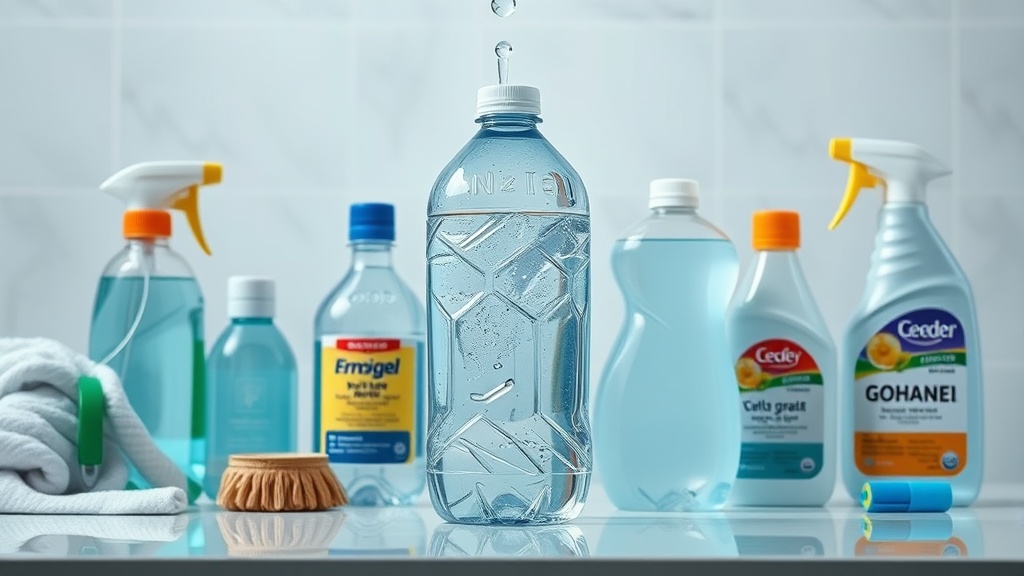
Refillable vs Concentrated Cleaning Products: What’s Better?
If you’re trying to cut back on single-use plastic and household product waste, you’ve probably encountered refillable cleaning products and concentrated cleaning solutions as appealing options. But which one actually reduces plastic waste more effectively? And how do their costs, ingredient transparency, and environmental impact stack up? This article breaks down the practical differences between refillable and concentrated cleaning products so you can decide which fits best for your household goals.
What Are Refillable and Concentrated Cleaning Products?
Refillable Cleaning Products
Refillable cleaning products typically come as ready-to-use liquids sold in larger containers or pouches. These products are designed for consumers to transfer back into smaller spray bottles or dispensers, often branded or proprietary. The key environmental benefit touted is a reduction in single-use plastic bottles since you reuse your spray bottle and buy fewer plastic containers overall.
Concentrated Cleaning Products
Concentrated cleaning products come in highly condensed form—usually a small bottle, packet, or tablet. You dilute them with water at home before use to reach the working solution strength. Concentrates reduce packaging size significantly because the cleaning agents are compressed into minimal volume and weight, which lowers shipping emissions and plastic use.
See also: Zero-Waste Cleaning Hacks Using Refillable Household Essentials
How Do They Work to Reduce Waste?
Phone cases · 15% off first order
Galaxy Case Co.Built for Galaxy. Ready for impact. Code FIRST15GAL- Refillables reduce plastic waste by encouraging reuse of containers. Instead of buying a new spray bottle every time, you keep your original bottle and refill it from a larger container or pouch.
- Concentrates reduce packaging and shipping waste at the source by shrinking the product volume and weight, which means less plastic used in total, less transport emissions, and often less shelf space required.
Both strategies aim to cut down on the amount of plastic thrown away. However, the extent of the environmental benefit depends on usage patterns, container materials, and consumer behavior.
Cost Comparison: Refillable vs Concentrated Cleaning Products
Cost is a major consideration for households trying to switch to more sustainable choices. To make an apples-to-apples comparison, understanding product concentration ratios and refill pricing is crucial.
- Concentration ratio refers to how much working solution you get from one bottle/flask of concentrate after dilution. For example, one 16 oz. concentrate bottle might make 64 oz. of usable cleaning solution, a 4:1 ratio.
- Price per use can be calculated by dividing the concentrate price by the total volume of cleaning solution produced, then compared to refill pack prices divided by their volume.
| Feature | Refillable Cleaning Products | Concentrated Cleaning Products |
|---|---|---|
| Packaging volume | Larger refill bottles/pouches | Small bottles/packets/tablets |
| Plastic use per cleaning volume | Generally more plastic but reused container | Minimal plastic due to concentrated form |
| Shipping weight | Heavier due to water content | Lighter, lower carbon footprint shipping |
| Cost per use | Mid-range, depends on refill pack cost | Usually lower when diluted if concentration ratios are high |
| Preparation needed | None or minimal (just refill bottle) | Requires dilution to correct strength |
| Cleaning performance | Ready to use, consistent | Comparable if diluted correctly |
| Ingredient transparency | Varies by brand, sometimes full disclosure | Often better due to simple, fewer ingredients |
| Waste generation | Some waste from pouch/bottle, reusable spray | Less waste, some plastic from concentrate container only |
In many scenarios, concentrates offer a lower cost per use compared to refillables, especially when buying third-party concentrates with high dilution ratios. However, convenience, correct dilution, and ingredient clarity also influence household preference and overall environmental impact.
Ingredient Transparency and Safety
Phone cases · 15% off first order
Phone Case GiftFun finds for every vibe. Code FIRST15GIFTIngredient transparency is a significant factor for households prioritizing health and environmental impact.
- Refillable products often list ingredients transparently but can vary greatly depending on brand and product line. Some use greener formulas; others rely on synthetic chemicals.
- Concentrates tend to have simpler, more concentrated formulas that are easier to label comprehensively. They often avoid unnecessary fillers, which may make it easier to identify safer or plant-based ingredients.
Keep in mind that concentrated products require users to handle and dilute chemicals carefully. Packaging may contain precaution instructions that are important to follow to avoid over-concentration and potential hazards.
When to Use Refillable vs Concentrated Cleaning Products
Consider your household priorities and limitations:
-
Choose refillable products if:
- You want the convenience of ready-to-use cleaning solutions.
- You prefer minimal preparation steps.
- You are committed to reusing bottles multiple times to maximize environmental benefits.
- You want to reduce single-use plastic but don’t want to manage dilution.
-
Choose concentrated products if:
- You want to minimize all packaging and shipping waste.
- You are comfortable with measuring and diluting to get the right cleaning strength.
- You want the best cost efficiency per use.
- You value ingredient transparency and control over dilution strength.
Common Pitfalls to Avoid
Phone cases · 15% off first order
Phone Cases For AllCases that match your energy. Code FIRST15ALL- Underutilizing refillable bottles: If you buy refill packs but don’t reuse your bottles enough, you miss out on the environmental benefit.
- Incorrect dilution of concentrates: Using too much concentrate can waste product and create stronger chemical exposure; too little can reduce cleaning power.
- Neglecting ingredient review: Both refillable and concentrate products can contain harsh chemicals; read labels carefully to avoid irritants or allergens.
- Assuming all “refillable” or “concentrated” claims equal sustainability: Some refill packs still use thick plastic and aren’t recyclable, while not all concentrates drastically reduce waste depending on packaging.
Practical Tips for Maximizing Waste Reduction
- Use refill bottles as long as possible: Rinse and store spray bottles correctly to avoid early replacement.
- Measure precisely when diluting concentrates: Use tools or provided measuring devices to avoid product waste.
- Choose brands or products with transparent ingredient lists: Better understanding helps you avoid harmful substances.
- Consider compatible third-party refills or concentrates: They can offer lower prices or better formulas with less packaging.
- Recycle all packaging responsibly: Whether refillable pouches or concentrate bottles, proper recycling completes the waste reduction loop.
Comparison Table: Key Decision Factors for Refillable vs Concentrated Cleaning Products
| Decision Factor | Refillable Products | Concentrated Products |
|---|---|---|
| Frequency of use | Best if cleaning products are used frequently | Also good for frequent users with dilution routine |
| Household size | Small to large households, convenience focused | Excellent for medium-large households saving space |
| Willingness to prep solutions | Low; prefers ready-to-use | Medium to high; requires dilution effort |
| Environmental impact - plastic | Reduced plastic from reusing bottles | Lowest plastic volume overall |
| Cost efficiency | Moderate; varies by brand and refill size | High; strong dilution lowers cost per use |
| Ingredient safety transparency | Variable; read each product label carefully | Generally better, fewer ingredients to review |
| Storage space needed | Larger refill packages take more space | Minimal storage due to compact concentrates |
Top Picks


Watchdog picks
- B00NQ1CLTICheck on Amazon → ·
- B00PB6F2V4Check on Amazon → ·
- B001E10B9ICheck on Amazon → ·
- 280XXL 281XXL Ink for Canon Ink 280 281 Replacement for Canon TR8620 Ink CartridCheck on Amazon → ·
- WEP 926LED V3 Soldering Station 130W MAX Soldering Iron Kit with Solder Wire, 5 Check on Amazon → ·
- 60W Adjustable Temperature Soldering Iron Kit - 9-in-1 With 5 Tips, Solder Wire Check on Amazon → ·
- B07J2P2V7TCheck on Amazon → ·
- Extra Deep Queen Sheet Set - 6 Piece Breathable and Cooling Sheets - Hotel LuxurCheck on Amazon → ·