
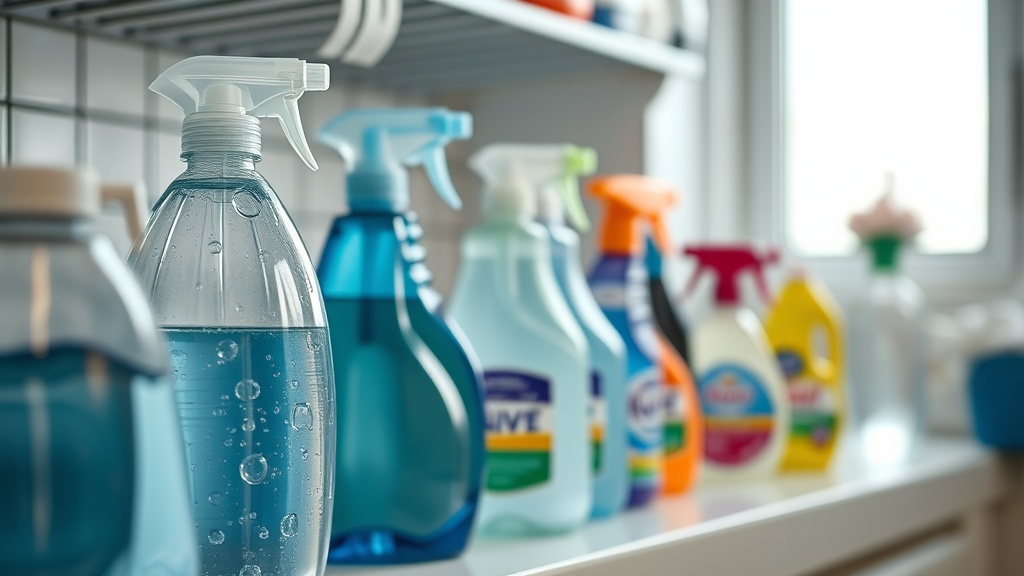
Many households want to reduce single-use plastic waste but find that their cleaning routines generate a surprising amount of empty bottles and bulky containers. Standard cleaning products often come in large, mostly water-based formulations, which means repeated purchases of heavy, plastic-packaged liquids that fill landfills. If you’re trying to cut plastic without compromising effectiveness, concentrated cleaning formulas offer a practical path forward—but only if you understand how to use them efficiently and spot refill claims that truly make a difference.
What Are Concentrated Cleaning Formulas?
Concentrated cleaning formulas are liquid or powder cleaning products designed to be diluted before use. Unlike traditional ready-to-use cleaners sold in bulky plastic bottles filled primarily with water, these concentrates contain a higher ratio of active cleaning ingredients with minimal fillers. Typically, you add water at home to create a full-strength cleaning solution.
The concentration ratio indicates how much water you add to the concentrate. For example, a 1:16 ratio means one part concentrate mixed with 16 parts water results in one bottle of finished cleaning solution. This means that one small bottle of concentrate can replace many large spray bottles or buckets of cleaner.
See also: Why Refillable Cleaning Products Reduce Household Plastic Waste
How Concentrated Formulas Help Reduce Plastic Waste
Phone cases · 15% off first order
Galaxy Case Co.Built for Galaxy. Ready for impact. Code FIRST15GAL- Less Packaging Volume: Concentrates require much smaller bottles or pouches to deliver an equivalent number of uses compared to ready-to-use cleaners.
- Lower Shipping Weight: Because concentrates are lighter and smaller, reducing their transportation footprint also supports environmental goals.
- Refill Options: Concentrates often pair with refillable bottles or compatible cartridges, eliminating the need to buy new plastic containers every time.
- Optional Third-Party Refills: Some concentrates can be purchased via third-party refill suppliers that use compostable pouches or bulk dispensers, further cutting packaging waste.
When To Use Concentrated Cleaning Products
Concentrated cleaning products work well for many household cleaning tasks, especially where dilution ratios are easy to measure and repeat. They’re ideal for:
- Multi-purpose cleaners for kitchen counters, floors, and bathrooms
- Dishwashing liquids
- Laundry detergents and fabric softeners
- Glass and surface cleaners
- Bathroom sprays and tile cleaners
They may be less practical for products that require precise dosing, such as some disinfectants or specialty cleaners, unless pre-measured concentrate pods or cartridges are available.
Key Factors to Consider When Choosing Concentrated Cleaning Products
Phone cases · 15% off first order
Phone Case GiftFun finds for every vibe. Code FIRST15GIFT-
Concentration Ratio and Yield: Higher concentration ratios mean more final solution per ounce of concentrate, which maximizes plastic and carbon savings. For example, a 1:32 formula will stretch further than 1:10.
-
Ingredient Transparency: Look for products that list all ingredients clearly. Concentrated formulas with non-toxic, biodegradable ingredients support sustainable choices.
-
Refill Packaging Type: Some manufacturers use rigid plastic bottles for concentrates (less plastic than ready-to-use but still plastic). Others offer flexible pouches or compressed tablets that generate far less waste.
-
Compatible Refillable Bottles or Dispensers: Check whether the concentrate is designed for use with brand-specific reusable bottles or supports third-party refill cartridges.
-
Cost Comparison: Concentrates may seem more expensive per bottle but compare price-per-use or price-per-ounce of actual cleaning solution to determine value.
-
Cleaning Effectiveness: Because the concentrate is diluted before use, it should provide equal or better cleaning power without extra waste or residue.
How to Calculate Plastic Savings and Cost-Effectiveness
Understanding plastic savings means comparing the amount of plastic used in concentrates versus ready-to-use bottles for the same number of cleaning tasks.
Example:
- Ready-to-use cleaner: 32 oz bottle = ~50g plastic
- Concentrate bottle: 8 oz = ~15g plastic with 1:16 dilution = 128 oz usable cleaner
Plastic per usable oz:
- Ready-to-use: 50g/32oz = 1.56 g/oz
- Concentrate: 15g/128oz = 0.12 g/oz
This shows the concentrated option uses roughly 90% less plastic per ounce of cleaner.
Similarly, factor in total cost: if a concentrate bottle costs $8 and produces 128 oz of cleaner, the cost per oz of cleaner is $0.06. A ready-to-use 32 oz bottle costing $4 is $0.125/oz—concentrate is also more cost-effective.
Plastic Reduction and Concentrate Packaging Types
Phone cases · 15% off first order
Phone Cases For AllCases that match your energy. Code FIRST15ALL| Packaging Type | Plastic Content | Waste Profile | Reusability Potential | Typical Concentration Ratio | Notes |
|---|---|---|---|---|---|
| Rigid Plastic Bottle | Moderate to high | Often single-use, recyclable | Refillable if designed | Often 1:4 to 1:16 | More durable but higher plastic weight |
| Flexible Plastic Pouch | Low plastic (thin film) | Sometimes recyclable or compostable | Usually single-use | Up to 1:32 | Very low plastic use, but fewer reuse options |
| Concentrate Tablets/Pods | Minimal/no plastic for concentrate | Packaging varies | Single-use or reusable | Varies | Compact and convenient, needs proper dosing |
| Bulk Dispensing Systems | Minimal plastic | Minimal if refill stations used | Reusable bottles key | Typically high dilutions | Best for zero-waste refilling |
Common Pitfalls When Using Concentrated Cleaning Products
- Incorrect Dilution: Overdiluting leads to ineffective cleaning; undiluting wastes concentrate and money.
- Ignoring Compatibility: Using concentrates incompatible with particular spray bottles or dispensers risks spills or poor performance.
- Assuming All “Refillable” Claims Mean Less Plastic: Some “refillable” programs simply replace one plastic with another without overall waste reduction.
- Not Checking Ingredient Labels: Some concentrates may be harsher or contain irritants; always verify ingredient safety especially for sensitive users.
- Bulk Buying Without Proper Storage: Concentrates stored improperly can degrade or clump, causing waste.
Practical Steps to Incorporate Concentrated Cleaning into Your Household
- Inventory Your Cleaning Needs: Identify which cleaning products you use most frequently and in what formats.
- Research Concentrated Options: Look for concentrates matching your common cleaning tasks with clear dilution instructions and refill options.
- Choose Refillable Bottles: Invest in reusable spray bottles or dispensers that work with your concentrate—this reduces future plastic use further.
- Measure Accurately: Use provided measuring caps or syringes to dilute precisely for optimal results.
- Save Concentrate Packaging for Refill: If your concentrate bottle is refillable, keep it and order refills only rather than new bottles.
- Evaluate Cost and Plastic Savings: Keep track of money and plastic saved over time to stay motivated.
- Consider Third-Party Refills: Supplements brand refills with eco-friendly third-party refill pouches if available.
- Properly Dispose or Recycle Plastic Packaging: Follow local guidelines for plastic recycling to close the loop on waste.
Summary: Concentrated Cleaning Formulas as a Strategy to Reduce Plastic Waste
Concentrated cleaning products offer a practical, meaningful way to cut household plastic waste by reducing packaging volume and weight, increasing product yield, and enabling refill systems. Selecting concentrates with high dilution ratios, transparent ingredient lists, and reusable bottle compatibility yields the best environmental and cost benefits. However, consumers must carefully avoid common pitfalls like incorrect dilution and misleading refill claims.
By combining concentrated formulas with reusable dispensing systems and mindful purchasing choices, households can significantly shrink their plastic footprint without sacrificing cleaning performance.
Top Picks


Watchdog picks
- LxTek Compatible Toner Cartridge 6510 6515 106R03480 106R03477 106R03478 106R034Check on Amazon → ·
- Lodge 12” Cast Iron Skillet - Chef Collection - Perfect Sear - Ergonomic HandleCheck on Amazon → ·
- B001ET73J2Check on Amazon → ·
- Brother HL-L2300D Monochrome Laser Printer with Duplex PrintingCheck on Amazon → ·
- E-Z Ink Remanufactured Ink Cartridge Replacement for 252XL Combo Pack for Epson Check on Amazon → ·
- B002BWQ6XKCheck on Amazon → ·
- B01N7V39QJCheck on Amazon → ·
- BIODANCE Bio-Collagen Real Deep Mask, Hydrating Overnight Hydrogel Face Mask, PoCheck on Amazon → ·
Products in this guide
- Dawn Ultra Dish Soap, Original Scent, 75 fl oz (2-Pack)Check on Amazon →
- Folgers Classic Roast Ground Coffee, 48 OzCheck on Amazon →
- Amazon Basics Pre-Seasoned Cast Iron Skillet, Oven Safe, Even Heating, Heat Distribution, Stove Compatible, Heavy-Duty, 15-Inch, BlackCheck on Amazon →
- Backcountry Iron 12 Inch Round Large Pre-Seasoned Cast Iron SkilletCheck on Amazon →