
Hand Sanitizer Price Comparison: Gel vs. Spray vs. Wipes

By Dana Wolff · Editor, RefillWatch
Published May 28, 2026
RefillWatch is reader-supported. When you buy through links on our site, we may earn an affiliate commission at no cost to you. This helps us keep tracking price hikes on the everyday essentials you buy on repeat.
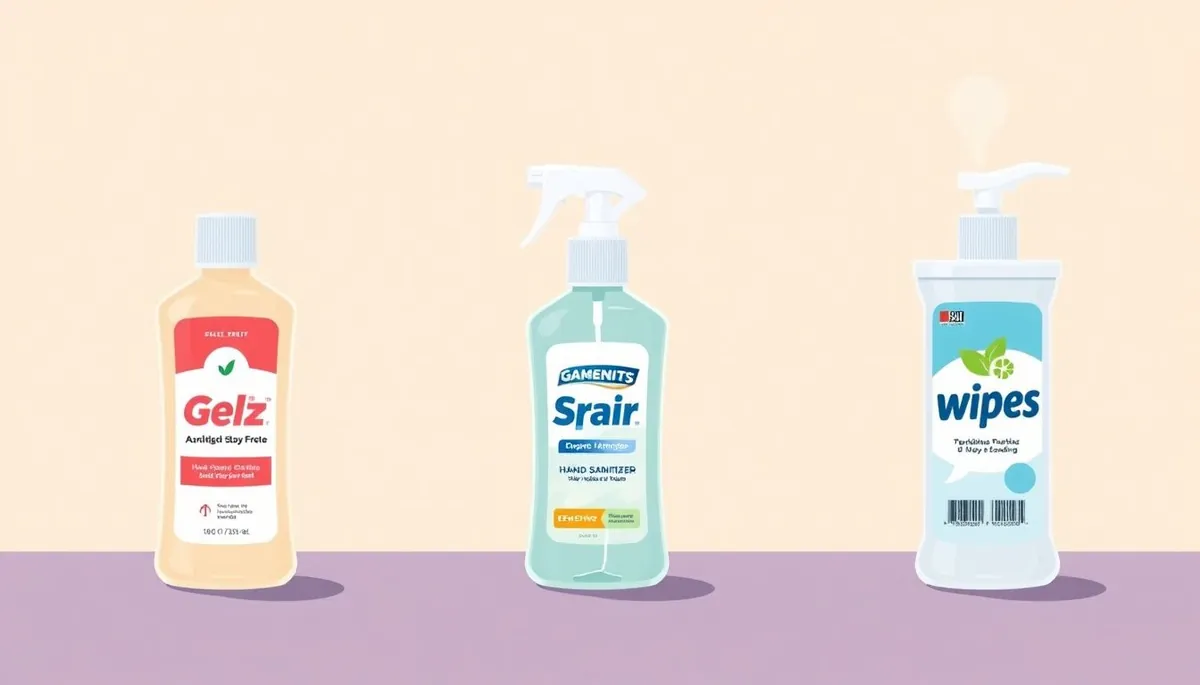
Hand sanitizer has become a staple in our lives, but the cost can add up, especially with frequent use. Are you getting the most for your money? Let’s break down the cost per application for different types of hand sanitizers: gels, sprays, and wipes. We’ll examine the pros and cons of each and help you make an informed decision to sanitize effectively without draining your wallet.
Hand Sanitizer Gel: The Classic Choice
Hand sanitizer gels are the most common type, readily available in various sizes and formulations. To determine their cost-effectiveness, we need to calculate the cost per application.
Calculating Cost Per Application for Gel
- Determine the size of the bottle: Common sizes range from 1 oz (30ml) travel bottles to larger 32 oz (946ml) bottles.
- Estimate the number of applications per bottle: A typical application requires about 0.5ml to 1ml of gel. Let’s assume 0.75ml for an average application.
- For a 1 oz (30ml) bottle: 30ml / 0.75ml per application = 40 applications
- For a 32 oz (946ml) bottle: 946ml / 0.75ml per application = 1261 applications
- Calculate the cost per application: Divide the price of the bottle by the number of applications.
Example:
- A 1 oz bottle costs $2.50: $2.50 / 40 applications = $0.06 per application
- A 32 oz bottle costs $15.00: $15.00 / 1261 applications = $0.012 per application
As you can see, buying larger bottles of gel hand sanitizer significantly reduces the cost per application.
Pros and Cons of Gel Hand Sanitizer
Pros:
- Widely available: Easy to find in most stores and online.
- Various sizes: Convenient for travel or bulk purchase.
- Cost-effective (in bulk): Larger bottles offer a lower cost per application.
- Effective: Generally contains 60-70% alcohol, meeting CDC recommendations.
Cons:
- Can be sticky: Some formulas leave a sticky residue on hands.
- Drying: Frequent use can dry out the skin.
- Scent: Some gels have a strong alcohol scent that some find unpleasant.
- Portability (large bottles): Larger bottles are not ideal for carrying around.
Hand Sanitizer Spray: A Lighter Alternative
Hand sanitizer sprays offer a different experience. They often contain moisturizing ingredients and come in a variety of scents. Let’s see how they stack up in terms of cost.
Calculating Cost Per Application for Spray
- Determine the size of the bottle: Spray bottles often come in smaller sizes, such as 1 oz (30ml) or 2 oz (60ml).
- Estimate the number of sprays per bottle: This is tricky as spray volume varies. We’ll assume 0.25ml per spray. A typical application requires 2-3 sprays, so let’s average 2.5 sprays or 0.625ml per application.
- For a 1 oz (30ml) bottle: 30ml / 0.625ml per application = 48 applications
- For a 2 oz (60ml) bottle: 60ml / 0.625ml per application = 96 applications
- Calculate the cost per application: Divide the price of the bottle by the number of applications.
Example:
- A 1 oz bottle costs $5.00: $5.00 / 48 applications = $0.10 per application
- A 2 oz bottle costs $8.00: $8.00 / 96 applications = $0.083 per application
Sprays tend to be more expensive per application than gels, particularly when comparing larger gel bottles. The [b09yt2h35s-touchland-hydrating-hand-sanitizer-spray-juicy-trio-set-wild] is a popular spray option, but remember to calculate the cost per application based on the bottle size and price.
Pros and Cons of Spray Hand Sanitizer
Pros:
- Less sticky: Sprays often have a lighter feel and don’t leave as much residue.
- Moisturizing: Many sprays contain hydrating ingredients like aloe vera or glycerin.
- Pleasant scent: Available in various fragrances.
- Portable: Ideal for carrying in a purse or pocket.
Cons:
- More expensive: Generally, a higher cost per application compared to gels.
- Smaller sizes: Less economical for frequent use.
- Spray volume variation: Harder to estimate how much you’re using.
Hand Sanitizer Wipes: Convenience at a Price
Hand sanitizer wipes offer the convenience of pre-moistened cloths for quick cleaning. But that convenience comes at a premium.
Calculating Cost Per Application for Wipes
- Determine the number of wipes per container: Containers typically have 20 to 75 wipes.
- Determine the price per container.
- Calculate the cost per wipe: Divide the price of the container by the number of wipes.
Example:
- A container with 30 wipes costs $6.00: $6.00 / 30 wipes = $0.20 per wipe
- A container with 75 wipes costs $12.00: $12.00 / 75 wipes = $0.16 per wipe
Wipes are the most expensive option per application.
Pros and Cons of Hand Sanitizer Wipes
Pros:
- Convenient: Easy to use on the go.
- Cleansing: Physically removes dirt and grime.
- Individually packaged: Hygienic and portable options available.
Cons:
- Most expensive: Highest cost per application.
- Environmental impact: Generates more waste than gels or sprays. Consider the environmental impact on top of the cost of alternatives like Clorox Wipes alternatives: DIY Disinfectant Solutions to Beat Price Hikes.
- Drying: Can dry out the skin with frequent use.
Making the Smartest Choice for Your Wallet and Health
When choosing between gel, spray, and wipes, consider the following:
- Frequency of use: If you use hand sanitizer frequently, larger bottles of gel are the most economical.
- Skin sensitivity: Sprays with moisturizing ingredients might be better for dry skin.
- Convenience: Wipes are ideal for on-the-go cleaning, but come at a higher cost and environmental impact.
- Budget: Calculate the cost per application to find the most affordable option.
Ultimately, the best hand sanitizer is the one you’ll use consistently. By understanding the cost per application and considering the pros and cons of each type, you can make an informed decision that keeps your hands clean without breaking the bank. Don’t forget to compare prices across different retailers to ensure you’re getting the best deal. RefillWatch will keep tracking prices, so you can catch shrinkflation before it drains your wallet. You may also find savings by understanding Concentrated All-Purpose Cleaner: Dilution Ratios That Actually Save Money. Remember, informed consumers make the wisest choices.